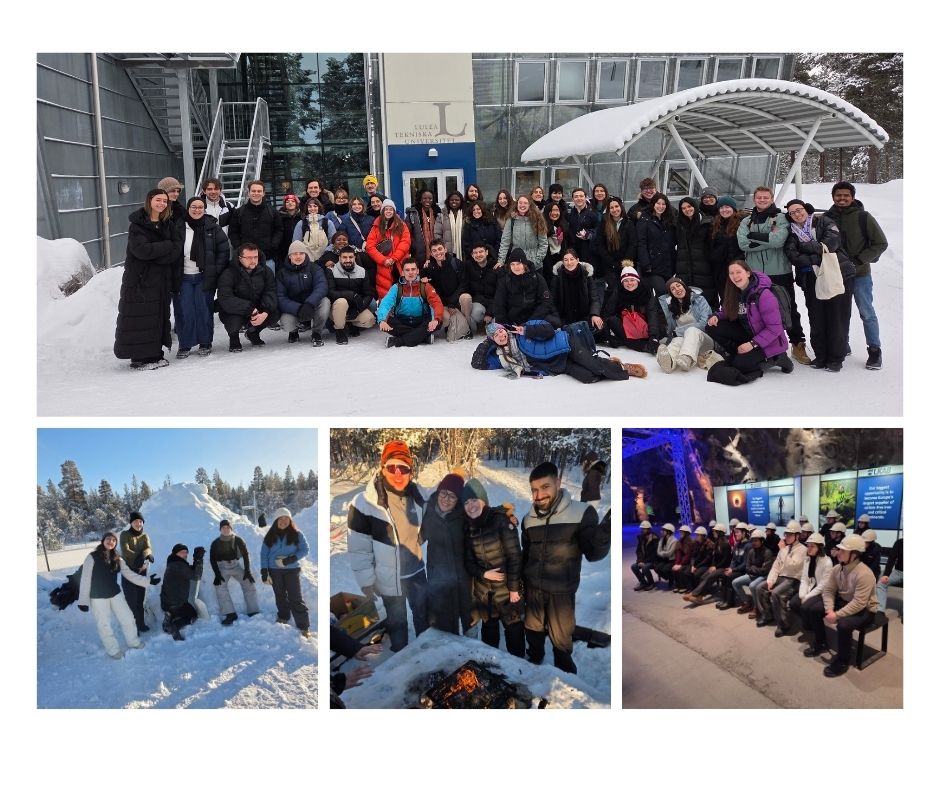
The competition for participation was fierce. More than 600 students applied for just 50 available places, highlighting the strong demand for international, collaborative learning opportunities focused on the Arctic region.
Throughout the week, students worked in international and interdisciplinary teams, combining technical, social, and human sciences perspectives. The program emphasized that solving complex global challenges requires collaboration across disciplines and borders. By integrating different academic backgrounds and cultural viewpoints, participants gained new insights into how space and Arctic research connect not only to technology, but also to society, sustainability, and human development.
A key strength of the Arctic Winter School is its interdisciplinary approach. Students quickly discovered that space is about far more than technical systems and engineering. Human sciences, social innovation, policy, and sustainability all play crucial roles in ensuring that technological advancements contribute positively to society.
Working closely together in diverse teams, participants developed innovative ideas while building lasting professional networks. As many students reflected, the course is not only about learning, but also about collaboration, shared purpose, and making friendships for life.
Victoria Barabash, Associate Professor at Luleå University of Technology and one of the teaching staff on the course, praised the participants’ dedication and achievements during the week.
“Well done to all students. They received a new perspective in their learning and professional development.”
She emphasizes that their horizons were broadened through the experience.
“By engaging with interdisciplinary subjects and international peers, students gained a deeper understanding of how space and Arctic research can address societal challenges and contribute to a better world.”