

As part of this day, we invite you to discover inspiring profiles of doctoral candidates from UNIVERSEH partner universities, showcasing the diversity of their research paths and their active engagement within our alliance. Through their work, commitment, and perspectives, these PhD researchers embody the collaborative spirit and scientific ambition that drive UNIVERSEH forward.
Discover UNIVERSEH’s Doctoral Stories
Coralie Lhabitant (TBS Education · Comue)

Coralie Lhabitant is a PhD candidate at TBS Education, affiliated with the Toulouse School of Management (TSM) Doctoral School, and conducting her research in collaboration with CNES (the French Space Agency).
How would you describe your PhD research in one sentence?
My PhD explores how organizations respond to socio-environmental institutional pressures within innovation projects, with a focus on the space sector.
Why did you choose this research topic, and how is it connected to UNIVERSEH?
I chose this topic because I’m deeply interested in how organizations navigate sustainability challenges while continuing to innovate, especially in complex and high-stakes sectors like space. This directly connects with UNIVERSEH, which promotes collaboration and innovation in the European space ecosystem, where these tensions between performance and responsibility are particularly visible.
What motivates you most in your PhD work?
What motivates me most is the feeling that my research can contribute to better understanding how organizations can integrate sustainability into real decision-making processes, not just as a concept but in practice.
What does a typical day as a PhD student look like?
There’s no real “typical” day! It can range from reading academic papers and analyzing data to attending meetings, teaching, or writing. It’s a mix of autonomy, deep thinking, and constant learning (and doubts.. a lot).
What advice would you give someone considering a PhD?
Be curious, patient, and resilient. A PhD is not just about thinking, it’s about perseverance and the ability to deal with uncertainty over a long period.
What misconception about PhD life would you like to correct?
That you have to work alone all the time. In reality, a PhD is highly collaborative, with exchanges with supervisors, peers, and the broader academic community.
What’s your go-to PhD survival snack or drink?
Strawberries when they’re in season, and orange-flavoured dark chocolate; the perfect mix of fresh and comforting!
What’s your favorite “research procrastination” activity?
I “procrastinate productively” by doing admin tasks… or by redesigning my slides for the tenth time, I might enjoy that a bit too much.
Describe your PhD in three emojis.
📚🚀🌍
If your PhD were a movie title, what would it be?
“Houston, We Have a Sustainability Problem”
If your research had a superpower, what would it be?
It would force organizations to see the environmental impact they can’t ignore: like turning sustainability into the loudest voice in the room, even in rocket science.
Julien Doche (ISAE-SUPAERO · Comue)
Julien Doche is a PhD candidate in the neuroergonomics laboratory at ISAE-SUPAERO. He is conducting his research in partnership with CNES on the retention of astronauts’ medical skills during long-duration missions
How would you describe your PhD research in one sentence?
Skill retention for medical procedures in the context of deep space missions.
Why did you choose this research topic, and how is it connected to UNIVERSEH?
It’s a highly motivating topic at the crossroads of medicine, space exploration, and learning science; with potential applications that could also benefit training here on Earth.
What motivates you most in your PhD work?
Starting from a blank page and taking the time to build a scientific project that combines rigor, exploration, and (hopefully) contribution to science.
What does a typical day as a PhD student look like?
A good part of the work happens on a computer, but my experiments with physical simulators bring a very hands-on dimension. I also try to make the most opportunities for science communication and exchanges with fellow PhD students and researchers. So, it’s not three years glued to a screen.
What advice would you give someone considering a PhD?
Make sure you have a strong trio: the right supervisor(s), the right topic, and the right institution. If those are in place, most challenges will be scientific, and the journey will be truly enjoyable.
What misconception about PhD life would you like to correct?
That « PhD students don’t really work. » Honestly, I work more now than I did in the industry. But it definitely remains manageable.
What’s your go-to PhD survival snack or drink?
Coffee and coffee with coffee on the side.
What’s your favorite “research procrastination” activity?
Coffee breaks with colleagues; which, surprisingly, often turns out to be quite productive.
Describe your PhD in three emojis.
💉📚🚀
Axelle Vanhaecke (Université de Toulouse – Jean Jaurès · Comue)
Axelle Vanhaecke was a PhD candidate at Université de Toulouse – Jean Jaurès until October 2025.
How would you describe your PhD research in one sentence?
The objectives of my PhD were to investigate how cooperation occurs within consortia and to explore the challenges associated with it.
Why did you choose this research topic, and how is it connected to UNIVERSEH?
I did a PhD in sociology on space activities purely by chance, but it’s a subject that had always interested me. The link with UNIVERSEH is the growing role of humanities in the space field.
What motivates you most in your PhD work?
I was motivated by the idea to gain a better understanding of the space field and to analyse the mechanisms of cooperation, as well as the associated difficulties.
What does a typical day as a PhD student look like?
A typical day usually involves reading articles, analysing qualitative or quantitative data and writing. Some days were very productive, whilst others were frustrating, as I often felt I wasn’t making enough progress.
What advice would you give someone considering a PhD?
I’d advise you to choose a subject you’re really interested in, so that you can devote yourself to it for several years.
What misconception about PhD life would you like to correct?
One of the common misconceptions about life as a PhD student is that you have to be a genius to do a PhD, whereas in reality, it is perseverance and resilience that matter most. A PhD is more like a never-ending marathon than a sprint; you therefore need to learn how to pace yourself.
What’s your go-to PhD survival snack or drink?
Coffee was my non-negotiable survival drink.
What’s your favorite “research procrastination” activity?
My favorite “research procrastination” activity was to have coffee break and informal chats with my colleagues about the difficulties we were each facing. Although this might have looked like procrastination at first glance, these discussions often helped me solve a problem that had been holding me up for days.
Describe your PhD in three emojis.
📚☕🚀
If your PhD were a movie title, what would it be?
Groundhog Day.
Agnieszka Talik (AGH Universty of Krakow)
Agnieszka Talik is a PhD candidate at AGH University of Krakow.
How would you describe your PhD research in one sentence?
My research focuses on developing sustainable composites from algae and regolith using ISRU principles, with a hint of bioplastic production and carbon dioxide sequestration for life support systems.
Why did you choose this research topic, and how is it connected to UNIVERSEH?
I’ve always dreamed of doing space research like this, so when the opportunity arose, I grasped the chance in a heartbeat.
What motivates you most in your PhD work?
Chemistry is a chimeric lover. Vast meanders of results often don’t align, making you wonder what is really happening behind the scenes. But then, one day, all the strange puzzles finally come together into one picture. And there it is: you understand the secrets nobody else does. The beauty of understanding feels addictive. It’s that thirst for knowledge and the thrill of the chase that make my work a dream job.
What does a typical day as a PhD student look like?
I would risk saying that there is no such thing as a “typical” day. In my field, lab workloads can fluctuate heavily. However, you do need to read a lot of literature and that becomes a daily habit.
What advice would you give someone considering a PhD?
Follow your dreams, but don’t settle for something inferior “just to do a PhD”. Shoot for the stars and think about the real impact your research may have on the world we live in from day one!
What misconception about PhD life would you like to correct?
People tend to imagine PhDs as lonely wolves trying to run a lab marathon by themselves, but it’s just simply impossible to do it all alone. Science is very much a team sport. The sooner you learn to collaborate, the faster you grow.
What’s your go‑to PhD survival snack or drink?
When the energy is low, time scarce, and the deadline close, a handful of almonds or a banana between the measurements can do wonders.
What’s your favorite “research procrastination” activity?
Organizing my data and highlighting topics in the lab journal with happy-go-lucky colors.
Describe your PhD in three emojis.
🧪♻️🌖
If your PhD were a movie title, what would it be?
Princess Fiona and her Enchanted Swamp
Piotr Pichór (AGH Universty of Krakow)
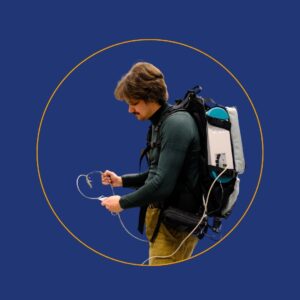
Piotr Pichór is a PhD candidate at AGH University of Krakow.
How would you describe your PhD research in one sentence?
My PhD’s main goal is developing a water quality forecasting and modelling system using satellite imagery.
Why did you choose this research topic, and how is it connected to UNIVERSEH?
I am interested in this side of space technologies that touches our daily life. Satellite data processing is the part where our space science can directly impact our safety on Earth.
What motivates you most in your PhD work?
My main motivation is my interest in the field. I’m always curious what comes next – even the seemingly boring tasks turn out to be a new learning experience or a fun quest. What especially motivates me in my research is that I’m not working with some abstract data structures – all the numbers in my calculations are physical places somewhere on earth that I can go and see myself. That’s really exciting!
What does a typical day as a PhD student look like?
I usually start my day with coffee and emails check, like most people. But then the interesting part starts. I usually read some scientific articles or project documentation to keep my knowledge of the field up to date, I write some code (usually fixing my own mistakes), and meet with my supervisor, my team or students. Almost every day I also work on some equipment improvements or design some new pieces of gear for our lab!
What advice would you give someone considering a PhD?
Go for it! The worst that can happen is that you won’t like it. But if you’re considering it – you probably will. Find some cool professor to work with, and ask them to be your supervisor! But also, learn statistics, it will help a lot.
What misconception about PhD life would you like to correct?
That you have to be extremely academically smart and have high grades to start a PhD. What matters the most are problem-solving and learning skills. Nobody will ask you to quote equations, but you will be asked to find a way to solve problems that you don’t always understand.
What’s your go‑to PhD survival snack or drink?
Salads! It feels amazing to open a box of salad with some fresh veggies after hours of working on your data.
What’s your favorite “research procrastination” activity?
Researching a completely new topic that I will probably never work in and I don’t understand, but it sounds cool!
Describe your PhD in three emojis.
🛰️💧🌍
If your PhD were a movie title, what would it be?
Something in the Water.
If your research had a superpower, what would it be?
Understanding my own code after a month of not looking at it (seriously, it’s impossible).
Nicol Latsia (Luleå University of Technology)
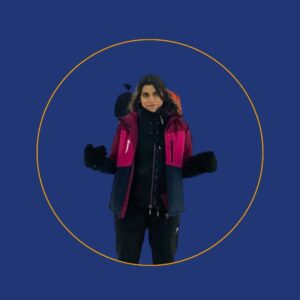
Nicol Latsia is a Doctoral Student of Atmospheric Science at Luleå University of Technology.
How would you describe your PhD research in one sentence?
The effects of thermal space weathering on the surfaces of airless bodies.
Why did you choose this research topic, and how is it connected to UNIVERSEH?
Space, it’s simply fascinating. My research connects directly with UNIVERSEH’s focus on space exploration.
What motivates you most in your PhD work?
The idea that I am uncovering processes that happen on planetary bodies and that my results can help explain observations from space missions.
What does a typical day as a PhD student look like?
Have two strong Swedish bryggkaffen, and work in the lab, or write papers in the office, then fika. Also, solving unexpected problems.
What advice would you give someone considering a PhD?
Have clear research questions by the end of your first year, and good communication with your supervisors.
What misconception about PhD life would you like to correct?
A clear misconception is that you have no time for anything else. You can think about your project while skiing too!
What’s your go‑to PhD survival snack or drink?
Cottage cheese.
What’s your favorite “research procrastination” activity?
Baking sourdough bread while waiting for my codes to run.
Describe your PhD in three emojis.
🪨☀️🌌
If your PhD were a movie title, what would it be?
The silence of the asteroids.
If your research had a superpower, what would it be?
Superpower: the production of unlimited meteorites.
Emanuele Tomassi (Luleå University of Technology)
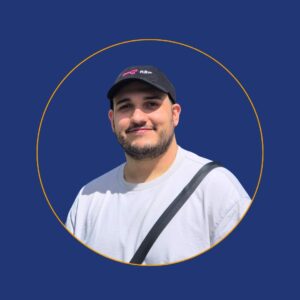
Emanuele Tomassi is a Doctoral Student of Space Systems at Luleå University of Technology.
How would you describe your PhD research in one sentence?
My PhD involves researching fast and low-cost methodologies to improve the satellite testing and verification process.
Why did you choose this research topic, and how is it connected to UNIVERSEH?
This research path allows me to deepen my knowledge of what happens after the satellite design phase, which was what I focused on during my Master’s Degree. My goal is to develop experience of the whole satellite lifecycle and become flexible and adaptable to every environment I might face in the future. My research topic is linked to UNIVERSEH’s goals of contributing to collaboration between European universities and space actors and to more accessible and scalable space technologies. By reducing the time and cost needed for satellite testing, my work could help lower the barrier for smaller universities or nations to participate in space missions and support the innovation for more inclusive space sciences.
What motivates you most in your PhD work?
The possibility of creating something new that could be helping future researchers and being surrounded by people with the same research enthusiasm as me, so that we can both complain about how difficult the researcher life sometimes is but also be excited when an experiment gives positive results or a new liquid nitrogen tank is delivered.
What does a typical day as a PhD student look like?
The schedule in academia is usually more flexible than the corporate world, but I still like having my day somewhat structured. Wake up at 7:30, be at work at 8:00 (I live in Kiruna, small city, 15 minutes to get to work are more than enough), then stay in the lab or in my office until lunchtime, with a fika break at 9:30 (mandatory in Sweden). Then back to the lab and leave around 16:00. After work it is time to go to the ski slope and then be back at home at 19:00, have dinner and relax.
What advice would you give someone considering a PhD?
Don’t expect to be trained or followed step by step like it usually happens during a Master’s thesis. Being a PhD student also means becoming independent and looking for your own path. You can of course rely on your supervisor or colleagues for advices or assistance, but at the end of the day you are responsible for your own decisions.
What misconception about PhD life would you like to correct?
Failure is not bad outcome. If you reached a conclusion that is not successful, that means you explored a path that future researchers can avoid to save time and resources.
What’s your go‑to PhD survival snack or drink?
Twix is always a nice choice, but I recently discovered the Swedish Polarbröd from the vending machine next to my office and that’s becoming my go-to snack
What’s your favorite “research procrastination” activity?
Going for a walk in the wood next to the university with my friends to look for reindeers and squirrels, or to play with the snow.
Describe your PhD in three emojis.
💥🛰⏩
If your PhD were a movie title, what would it be?
Fast and Furious (hopefully not furious but at least I am trying to make things fast).
If your research had a superpower, what would it be?
Time manipulation! Pretty obvious choice when you want to make space and satellites more accessible and less time consuming.
Sara Maria Eraso (University of Namur)
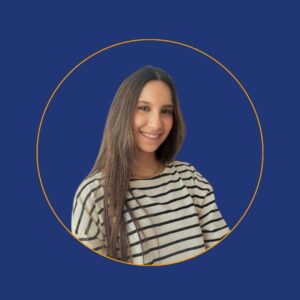
Sara Maria Eraso is a PhD student at the Computer Science Department at the University of Namur.
How would you describe your PhD research in one sentence?
My PhD research is about finding smarter ways to select a subset of possible configuration of complex Cyber-Physical Systems in designing and testing phase.
Why did you choose this research topic, and how is it connected to UNIVERSEH?
We need to find new algorithms and mechanisms that are more computationally efficient; this leads to savings in time, resources, and supports the process of creating new products across various industries. The connection with UNIVERSEH lies in the fact that one of these industries, along with Cyber-Physical Systems, is the satellite sector; therefore, my research focuses on the joint effort of European science and technology development in Space.
What motivates you most in your PhD work?
I’m very motivated by exploring technology; every day is unpredictable, and new devices might appear. We have a very powerful tool at our disposal, and through research, we are always trying to move forward. Implementing our ideas while contributing to society is very motivating.
What does a typical day as a PhD student look like?
A typical day as a PhD student can vary, but I usually like to work out before starting my day, then have breakfast and get ready to go to the university. After that, my day consists of many tasks: we have our individual work, but I also have meetings with my supervisor, committee, and fellow PhD students. After spending time in the laboratory, I might go out to hang out with my friends and relax.
What advice would you give someone considering a PhD?
I would tell that if their passion lies in science, they should stick with their decision. It’s also very important to choose your advisor wisely, as that will shape your academic and professional life for years to come.
What misconception about PhD life would you like to correct?
I would like to say that you don’t need to be a genius to do it. PhD life is more of passion, resilience and dedication; you do not need to have the answers to everything, just need a good project management and the courage to carry out.
What’s your go to PhD survival snack or drink?
My survival drink for PhD is coffee definitely. But I do not need as many as my colleagues need, just a cup of coffee in the mornings, and for the rest of the day water to stay hydrated.
What’s your favorite “research procrastination” activity?
We have a communal research procrastination activity that is going to others office to bother them and stop working for a moment all together.
Describe your PhD in three emojis.
🤯👩🏻🦯🦾
If your PhD were a movie title, what would it be?
A Series of Unfortunate Experiments.
If your research had a superpower, what would it be?
Making sense of chaos before it makes no sense of me.
Charles Modera (University of Namur)
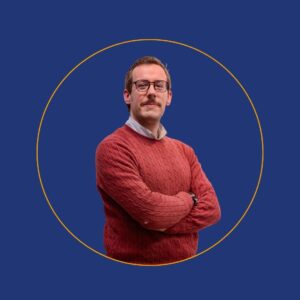
Charles Modera is a PhD student at the Mathematics Department at the University of Namur.
How would you describe your PhD research in one sentence?
The subject of my thesis is the study of the environment surrounding supermassive black holes using gravitational waves.
Why did you choose this research topic, and how is it connected to UNIVERSEH?
I am fascinated by the universe, and particularly by the most extraordinary objects in space: black holes. Space research encompasses various fields, and understanding the objects of the cosmos is one of them.
What motivates you most in your PhD work?
My main motivation is discovery and understanding, but all of this whilst marvelling at the world around me. Being able to study what’s happening millions of light-years away using just a few equations and a computer is simply amazing. What’s more, we can test theories in extreme environments, such as in the vicinity of black holes.
What does a typical day as a PhD student look like?
I am also a teaching assistant. My days are therefore divided between teaching, research and the activities that keep the University of Namur running. Teaching feeds into research and research feeds into teaching; this means my days are fulfilling, varied and, above all, very busy!
What advice would you give someone considering a PhD?
If this person is curious and keen to learn, then they should go for it! I would, however, draw their attention to how they manage their time and remind them that a PhD isn’t their whole life either.
What misconception about PhD life would you like to correct?
A PhD is not simply a continuation of your studies. It is a structured yet highly independent profession, even though you are still a student. Nor is it a higher level of academic achievement, but rather a commitment to conducting research and advancing science.
What’s your go‑to PhD survival snack or drink?
Many of my colleagues would say coffee, but as I don’t drink it, I’d say a beer with my colleagues after a good day’s work.
What’s your favorite “research procrastination” activity?
Wikipedia is worse than black holes! You start off looking for a piece of information and 30 minutes later you find yourself reading the biography of a scientist you’d never heard of before. And an hour later, you’re on a page about a fascinating topic that has absolutely nothing to do with what you were originally looking for.
Describe your PhD in three emojis.
🧑🏫🌟🍻
If your PhD were a movie title, what would it be?
Sherlock Black Holes.
If your research had a superpower, what would it be?
Freeze time.
Georgios Kampourlidis (Heinrich Heine University of Düsseldorf)
Georgios Kampourlidis is a PhD student at the Institute for Organic Chemistry and Macromolecular Chemistry here at Heinrich Heine University of Düsseldorf.
How would you describe your PhD research in one sentence?
My PhD research is focused on developing new synthetic methodologies for the synthesis of biologically active molecules, or molecules that may have potential pharmaceutical significance. My goal is also to modify the structure so that their pharmacological relevance is enhanced with every modification.
Why did you choose this research topic, and how is it connected to UNIVERSEH?
I decided to work in organic chemistry because I want to pursue a career in the pharmaceutical industry in the future. Working in organic chemistry provides you with a really important set of skills. For example, you see a molecule and, slowly, you start thinking about which reactions led to the synthesis of this molecule. This skill is essential for someone who works in the pharmaceutical industry. I’ve been working on my research project since my master’s thesis, where we already achieved some promising results. That motivated me to continue developing it further during my PhD, where I also expanded the project with my own ideas.
Part of your job as a PhD student is communicating your research, you need to present it, discuss it, and exchange ideas with the international scientific community. That’s where I see a strong connection to UNIVERSEH. I think this is the common ground between UNIVERSEH and my work, because both foster this international, intercultural, and interdisciplinary dialogue. They both create the space for people to come together, exchange ideas and give constructive feedback to each other, which is very important in science.
What motivates you most in your PhD work?
What excites me most about my work is the moment when your idea becomes reality. You start by imagining a molecule, sketch it on paper, walk into the lab, and a few hours later, you’re holding it in your hands as a real compound, and you can prove that it’s exactly this and nothing else.
Another aspect I really value is the opportunity to communicate my research with my peers or with researchers from around the world at conferences. In this process you get to learn more about your field and through the exchange you give or receive feedback.
And, of course, there’s one more big motivation: when I finish my PhD, I’ll finally get to select “Dr.” as my title when booking a flight or a train ticket (laughs).
What does a typical day as a PhD student look like?
I wake up in the morning, I get myself ready, I go to the lab, I do some documentation, I update my lab journal and I plan what I am going to do that day. I then proceed to set up reactions using appropriate flasks and reaction vessels. As soon as the reaction is ready, I proceed to isolate my product with a number of established purification techniques. When I have my compound in pure form, I perform some analytical methods to verify that this molecule is exactly the one that I intended to synthesize.
What advice would you give someone considering a PhD?
Choose your mentor and research group carefully, as both strongly influence your well-being and success during a PhD. Even with a supportive supervisor, an uncooperative group can make the experience much harder, so it’s essential to gather honest feedback from current or former students before joining. Seek their perspectives on the group dynamics and overall experience to make an informed decision.
If you’re doubting yourself at the end of your master’s, consider taking the leap, PhDs foster both career growth and deep personal development by challenging your thinking and shaping your scientific identity. However, it’s not the right path for everyone, and that’s okay. If you do start a PhD, remember that “slow is fast”: work methodically, set small goals, and prioritize quality over speed, especially in experimental fields where careful execution matters more than rushed progress.
What misconception about PhD life would you like to correct?
When I started as a bachelor student, I imagined PhD students as near-experts who always knew what they were doing and achieved exactly the results they expected. Now that I’m in that position, I realize that’s a myth; while I know much more than before, I’m far from an expert. Chemistry, like many sciences, is inherently experimental, meaning things often go wrong, require creativity, and force you to adapt. Progress usually comes from a series of failed attempts, each prompting you to rethink and improve your approach until you eventually succeed. So a PhD is less about knowing everything and more about learning how to navigate the unknown.
What’s your go to PhD survival snack or drink?
That drink would be coffee, and I’d say that’s the case for most or at least half of the PhD students out there. I don’t snack a lot, but a small piece of chocolate once in a while does me good. Or these little Lotus biscuits you get with your coffee, these are very nice.
What’s your favorite “research procrastination” activity?
I enjoy procrastinating by setting up the playlist that I will listen to in the lab that day. In the lab, the only thing that you get to hear are machines working. Listening to music while working can be really entertaining, so you need to have a playlist. Setting it up is such a good procrastination tactic!
Describe your PhD in three emojis.
🙂🔄🙁
If your PhD were a movie title, what would it be?
A series of unfortunate events.
If your research had a superpower, what would it be?
Most definitely time dilation. You might work on something, it might feel like 30 minutes to you, but it turns out four hours have passed.
Laura Cwalina (Heinrich Heine University of Düsseldorf)

Laura Cwalina is a PhD student in the American Studies department at at Heinrich Heine University.
How would you describe your PhD research in one sentence?
As I’m in the humanities (I’m not doing a STEM degree, obviously!), my dissertation is about “Narratives of Planetary Care in North American Astroculture”, and I’m focusing on both novels and life-writing texts as well as cultural events. So, planetary care from a North American perspective.
Why did you choose this research topic, and how is it connected to UNIVERSEH?
I did my bachelor’s and my master’s here at HHU. I did the English program, so “Anglistik/Amerikanistik”. I wasn’t much interested in space during my bachelor’s, and then, at the same time I started my master’s, UNIVERSEH settled here at HHU. I’m currently doing the Critical Outer Space Studies course for UNIVERSEH in the humanities at HHU. My predecessor was Dr. Jens Temmen (now professor), who also worked with UNIVERSEH and kickstarted the whole topic of Outer Space and Critical Outer Space Studies for the humanities at HHU. He was also in the American Studies department. I took his courses and also worked with him, so I got into this topic, as well. When it was clear that he was leaving, we were already talking about me doing a PhD on this topic, as that was the time I got interested in it myself.
Long story short, I got into this because of UNIVERSEH, which is ironic—or not ironic, but rather nice—, as I’m now the one giving the courses and working with them, going full circle. So it was by surprise, more or less, that everything fell into place and I started being interested in Outer Space.
What motivates you most in your PhD work?
I like a lot of parts of this job. I like teaching, I just finished a block seminar about Life Writing in Outer Space. The nice thing about giving courses on your own topic is that you can motivate other people about this topic. It’s always great to have people excited about what you teach and what you research. That’s very motivating: Getting the feedback that the topic creates a lot of interest. That’s always nice.
Another motivating part: even though writing is very lonely (in the sense that you’re doing most of the work on your own), the moment when you finish something or get a breakthrough, that’s kind of energizing. That moment of success and creating something new, creating something in your field that could be interesting.
I also think working with others is very motivating, either in my own department or at UNIVERSEH at large, having connection points with other people and talking about it, also knowing that it’s part of a network that has different pieces working together. That is very nice as a structure.
What does a typical day as a PhD student look like?
It depends on when in the semester we are. If it’s in the semester, then most of time, there’s also teaching. I have to teach a seminar every semester. So there’s the preparation for that, because (obviously), you’re not just standing there for one and a half hours but also preparing the materials and changing the syllabus if you notice that it doesn’t work with this group of students, that you have to change course and adjust.
Generally, we have three main areas (at least in my contract). This was the teaching part.
Then we have the administrative work: doing different things for the American Studies department, which could be preparing workshops, helping with guest speakers, for example inviting them. We have also done an art exhibition before (which was part of UNIVERSEH), where I was also involved in the prep work. That is the administrative part.
And then the third part is, of course, research. That means writing my dissertation. I’m currently working on my first chapter. The last few months were kind of a preparation for, you know: “What am I doing with my project?” Now I can finally really go into writing and organizing everything. But it also means speaking at conferences. Last year, I was in Vienna and talked about Space Tourism and Feminism, which was very exciting. This is always the part where you have to keep an eye on the deadlines and what you have to do *now*.
Obviously, your PhD thesis is the most important part because that’s your qualifying work that you should have finished at the end of your time here. But it’s also the only part without a deadline! Well, it has a “very far away” deadline. So that’s the part where you have to force yourself sometimes to really sit down and work on this, because otherwise it will not get finished. At the same time, it’s the one where you have the *feeling* that you can put it off. A lot of the work days consist of prioritizing what has to be done now or later or at what stage.
What advice would you give someone considering a PhD?
Maybe to not have too high expectations for the first few months. It’s okay to find your footing. Maybe to make sure that you have people in your own field that you can rely on. That’s a big benefit, to have someone where you know: this person has your best interest at heart and can also judge things realistically.
Right now, I have a guideline of what I should do in which year and when I should finish what. Still, when you go like “I want to do three conferences this year! Does this make sense?”, to have someone to tell you ”Okay, no. Don’t do too much, focus on this, focus on that.”, and that you can trust that this person doesn’t say that for anything other than your own benefit, it makes things a lot easier and puts pressure off yourself.
April 1st was when the first year of my PhD ended. In hindsight, you sometimes can’t judge how much time something takes or how much work it is. It’s good to have someone to tell you “Do this, not that, and then it should be fine”.
What misconception about PhD life would you like to correct?
I sometimes have the feeling, especially with people who have not gone to university or don’t work at a university, that all people who teach seminars are kind of under one umbrella: PhD students, postdocs, professors—all of them are teaching seminars. But they’re not the same, there are a lot more steps you can take in your university career. I mean, sometimes it works in your favor, because if the students don’t really realize that there are these hierarchies, then they don’t respect you any less than, say, a postdoc.
One other thing is that I think a lot of other times people don’t really know *what* you’re doing in day-to-day life. (We kind of answered that before.) But it can be confusing when I tell people: “I did a block seminar, so I don’t have to teach this semester any more!”, they are like: “But what are you *doing* now until October!?” Then I explain: “Okay, listen. Teaching is not even the most *important* part of my job.” I think there’s a lot of confusion and wonder about what people are actually doing in their day-to-day life.
Also, there’s this confusion about why we never have time. That’s because so many things are happening in a year. A lot of travel, potentially. Last year, I was on four or five different work trips. That takes time and preparation. All of this can add to the confusion about what I’m doing every day.
What’s your go to PhD survival snack or drink?
Chocolate. Definitely chocolate.
What’s your favorite “research procrastination” activity?
Probably reading other primary texts: “Oh, I could just read another novel or short story to, you know, not do the work that potentially needs to be done now!”
Describe your PhD in three emojis.
🌍️📖 🫂
If your PhD were a movie title, what would it be?
The Ghost Project.
If your research had a superpower, what would it be?
Being the most fun at a dinner party. That’s what my research does! (laughs).