
In the Science for All blended intensive programme (BIP), students worked on producing a popular science video. Conceived as a bridge between academia and the wider public, the initiative aimed to equip participants with the skills needed to communicate their disciplinary expertise clearly and effectively beyond specialist circles. A strong emphasis was placed on crafting engaging and accessible video content, while encouraging students to adapt their use of English to reach non-specialist audiences. The programme also encouraged collaboration across national, cultural and disciplinary boundaries, reflecting its international and interdisciplinary nature.
Over the course of the programme, students developed a wide range of key skills. They strengthened their linguistic abilities, particularly in the context of popular science communication in English, while improving overall fluency through sustained interaction in an international environment. Critical thinking was also a central focus, fostered through structured peer-review sessions that encouraged reflection and constructive feedback. In parallel, participants enhanced their digital literacy, gaining experience in sourcing reliable information online as well as practical expertise in filming and video editing.
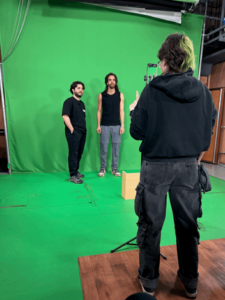
A high degree of autonomy was expected throughout the programme. Students were, for instance, given a full day to independently organise and carry out the filming of their projects, with teachers providing guidance and technical support when needed. They were also encouraged to engage thoughtfully with their chosen topics, identifying angles that would resonate with a broader audience. Creativity and originality were particularly valued, especially in the visual storytelling that brought their projects to life.
What really struck us was how quickly the groups clicked. From day one, there was a strong sense of collaboration, curiosity, and openness. Through a series of workshops, they progressively developed their ideas, wrote their scripts, and gained confidence in popular science communication. Aude Hansel and Natassia Schutz, project leaders and language lecturers at UNamur.
What did the programme include?
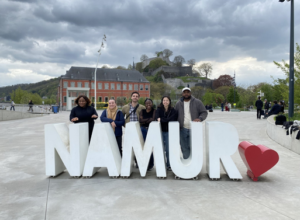
The first part of the course consisted of a 10h MOOC devoted to (1) theoretical considerations related to popular science and science communication, (2) the identification of the target audience and distribution channels, as well as (3) language and linguistic exercises. Students were then offered the opportunity to get together in Namur (Belgium) from Monday 13/04/26 to Friday 17/04/26 to work on their video.
The week was not only about the projects; it also included discovering Namur, a full day of filming, the start of the editing process, and many informal moments during which students shared languages, cultures and experiences. Aude Hansel and Natassia Schutz, project leaders at UNamur.
Students were welcomed on Sunday evening by a UNamur’s students club, setting a warm and relaxed tone for the week ahead. Activities began on Monday with a workshop led by the Belgian team, where ice-breaking moments blended with collaborative exercises, allowing students to start shaping their video scripts. The day concluded with a guided tour of the city, offering both discovery and informal exchange.
On Tuesday, colleagues from the AGH University of Krakow and the University of Luxembourg led sessions exploring key dimensions of science communication, from engaging an audience to conveying meaning beyond words. The programme continued into the evening with a group dinner in the city centre, further strengthening the bonds between participants.
Wednesday opened with a seminar by the Polish team focusing on prosody, pronunciation and intercultural communication. In the afternoon, the Belgian team introduced practical filming techniques in a hands-on session, after which students ventured outdoors to experiment with video production. Thursday was then devoted entirely to independent group work, as teams filmed their projects across the city and on campus.
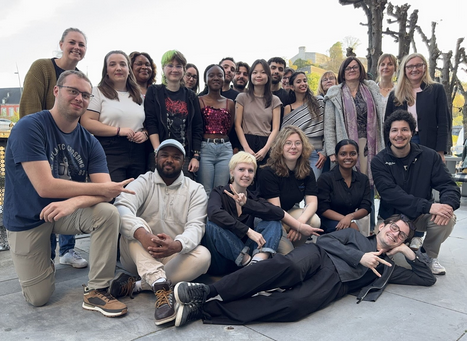
The BIP week drew to a close on Friday morning with screenings of the first video drafts, followed by a structured peer-feedback session. A final lunch provided a moment to reflect on the week’s achievements and to mark the end of a shared experience.

Funded by the European Union. Views and opinions expressed are however those of the author(s) only and do not necessarily reflect those of the European Union or European Education and Culture Executive Agency (EACEA). Neither the European Union nor the granting authority can be held responsible for them.