
On 19 and 20 October 2026, around 90 students took part in the NeoSpace Challenge and the UNIVERSEH Student Conference on Space Sustainability, around 80 of them in person. Nineteen teams competed in the Challenge, alongside NeoSpace Europe 2026.
UNIVERSEH at a glance
| 57% of all Challenge registrations came from UNIVERSEH |
39% of selected participants were UNIVERSEH students |
68% of competing teams included at least one UNIVERSEH student |
7/7 UNIVERSEH universities represented among registrations |
The Challenge and the Student Conference offered two complementary ways of learning: one focused on developing and testing solutions under real constraints, the other on scientific communication, critical discussion and learning from peers. Together, they took students from creating an idea to testing it, sharing it and connecting it with a wider community.
CREATE – Turning ideas into projects
The NeoSpace Challenge invited Bachelor’s, Master’s and doctoral students to work in three areas: Next-Gen Downstream, Biotech in Space and Space Operations, either responding to real company use cases or developing their own project.
The journey began well before Luxembourg. After online presentations and Q&A sessions, participants submitted pre-projects, and the teams for the final phase were selected.
On site, a technically convincing solution was not enough: economic potential and the regulatory environment also had to be considered. Supported by mentors, company representatives and experts, teams turned their ideas into structured proposals compatible with an ESA Open Space Innovation Platform (OSIP) Call for Ideas, a format much closer to professional practice. SPAIDER Space provided tools and a hands-on workshop, and selected teams received access to LuxProvide‘s MeluXina supercomputer.
TEST – Learning to defend an idea
By the end of the first day, ideas had become written proposals. The next morning, teams had ten minutes to present them to experts and answer their questions, much as they might one day convince a partner, client or investor. Later, they condensed the same project into a three-minute pitch, learning to identify what matters most and adapt complex ideas to different audiences.
UNIVERSEH’s strong involvement showed in the results: seven of the ten highest-ranked teams included UNIVERSEH students, and teams with UNIVERSEH participants won awards in three of the five categories:
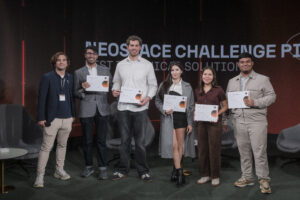 BEST – Best Technical Solution |
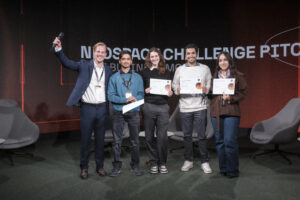 Lynq – Best Business Model |
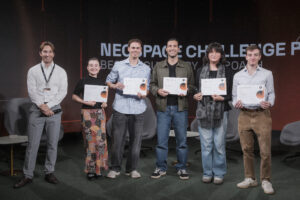 Kepler – Best Regulatory Approach |
© PANCAKE! Photographie / LSA
- BEST: Best Technical Solution, for preventing gas bubbles from interfering with organoids in microgravity cell culture
- Lynq: Best Business Model, for NTN-Pulse, a digital twin and policy engine for a low-Earth-orbit constellation
- Kepler: Best Regulatory Approach, for Orbital Detector, a microsatellite mission to detect and characterise small debris clouds in low Earth orbit
Beyond the awards, the real value lay in the process: taking an idea through several stages of development, scrutiny and communication, while understanding how technical, economic and regulatory considerations interact.
SHARE – Learning through scientific exchange
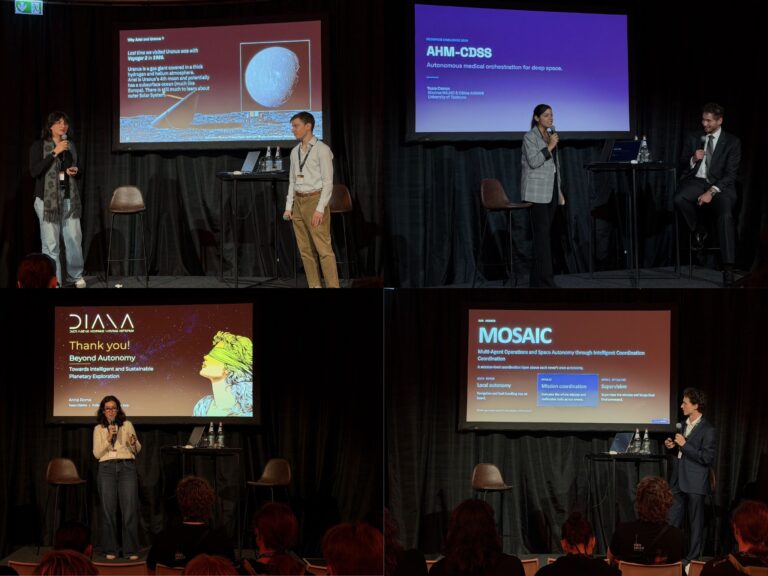
Student presentations at the UNIVERSEH Student Conference · © UNIVERSEH
On 20 October, the UNIVERSEH Student Conference on Space Sustainability created a different learning environment. Students presented research, project work and mission concepts on orbital debris and near-Earth objects, Earth observation, biotechnology, space operations, planetary exploration and sustainable human activity in space.
But presenting was only part of it. Students also chaired sessions, asked questions, responded to feedback and discussed work from other disciplines and universities. Explaining specialised work to a mixed audience, and listening critically to others, made the conference a space for scientific communication, peer learning, critical thinking and interdisciplinary exchange.
The programme opened with a keynote by Muriel Hooghe, Senior Manager and Lead Space Safety at the Luxembourg Space Agency, while Miguel Olivares-Mendez, Abigail Calzada Diaz and José Manuel Rodríguez Cordero contributed expertise and feedback to the discussions.
CONNECT – Learning inside the professional space ecosystem
Because it took place alongside NeoSpace Europe 2026, the student programme was not an isolated university activity. Students were immersed in a professional conference with decision-makers, researchers, entrepreneurs, investors and industry specialists from across the space sector.
It started with the NeoSpace networking event on 19 October, and the next day students moved between the Student Conference, their Challenge work and the wider programme. The link was clearest when selected teams took their projects onto the NeoStage, placing student work directly within the professional programme. Here, networking was part of the learning itself: connecting academic knowledge with professional practice and building first relationships in the space ecosystem.
More than a two-day event
The NeoSpace Challenge was co-organised by the Luxembourg Space Agency, UNIVERSEH European University, Technoport and Luxembourg AI Factory, with the involvement of the University of Luxembourg and the University of Namur, and with support from LuxProvide and SPAIDER Space. Companies from the space sector contributed real-world challenges and expert input. The UNIVERSEH Student Conference on Space Sustainability complemented it with a dedicated academic space for students to present, discuss and develop their own work.
Students created ideas.
They tested them against real constraints and expert questions.
They shared knowledge and learned from one another.
And they connected their work with the professional space community.
For two days in Luxembourg, students were not simply preparing for a future role in the space sector: they were already working as researchers, innovators, communicators and collaborators. That combination of learning, research, innovation and professional immersion is exactly what UNIVERSEH aims to create.
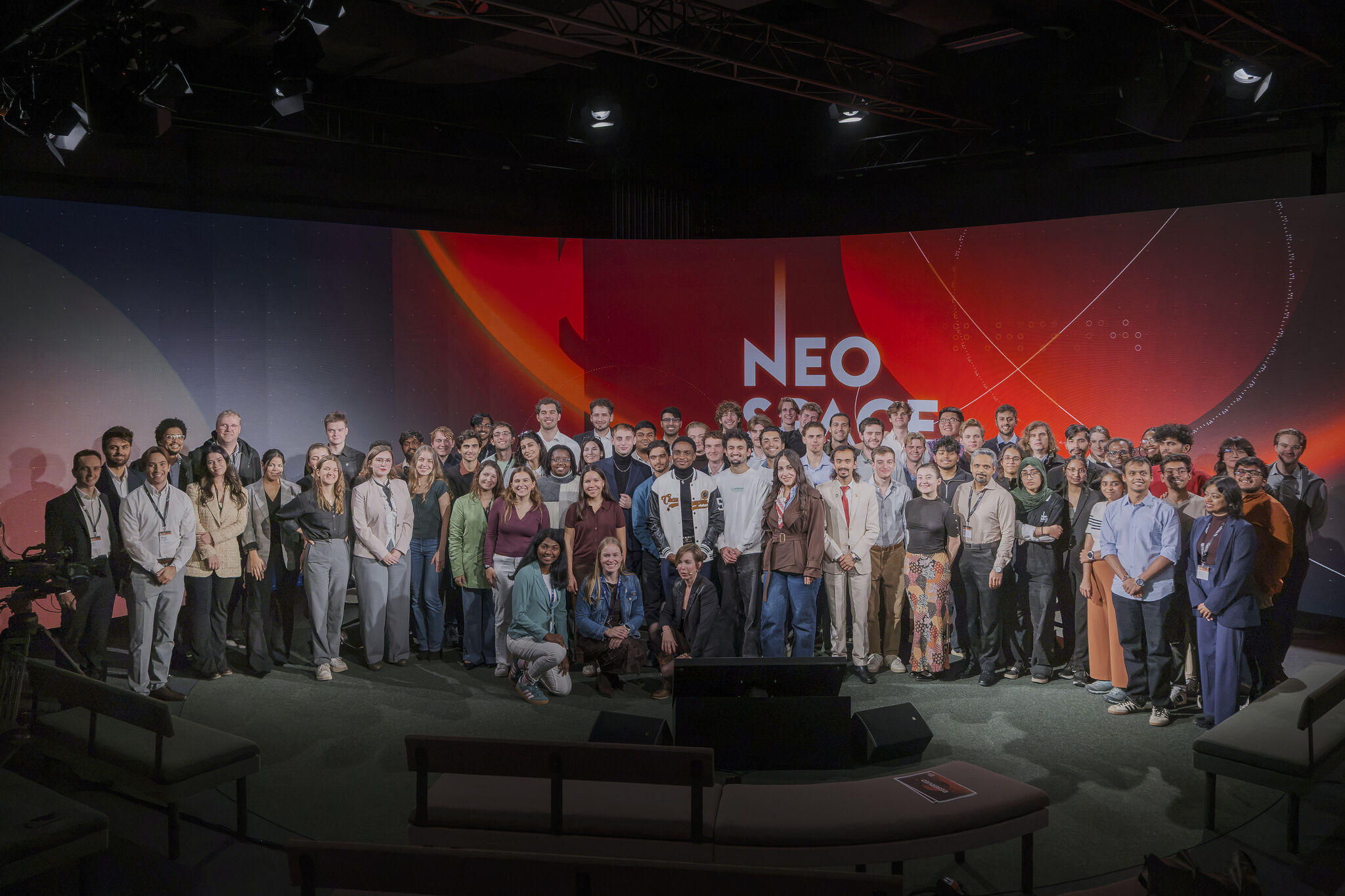
Photos: © PANCAKE! Photographie / LSA (NeoSpace Challenge) · UNIVERSEH (Student Conference)